

Best Baking Activities for Kids (by Age Group)
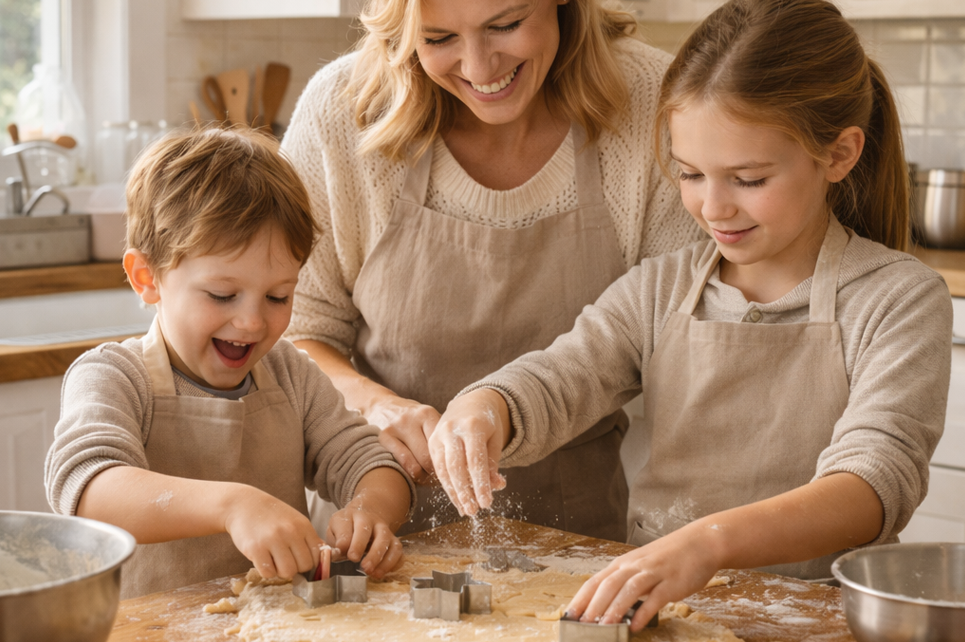
Children can start baking from as young as age 2 and the right activity at the right age turns kitchen time into genuine skill-building. This guide breaks down the best baking activities for kids by age group, from toddler-safe mixing and pouring through to teens making croissants independently. Each section includes project ideas, safety tips, and the real skills children develop along the way.
There's something about baking with kids that goes beyond the bake itself. The flour on the worksurface. The serious concentration on a small face as they level a measuring cup. The pride when something they made comes out of the oven and everyone actually wants to eat it.
Baking is one of the best activities you can do with children, at almost any age. It teaches maths and science without a textbook, builds confidence and fine motor skills, and creates the kind of memories that stick for years. But the key is matching the activity to the child's age and ability. A three-year-old and a twelve-year-old need very different things from a baking session.
"Baking with kids isn't about perfect results. It's about the process — the measuring, the mixing, the learning. The mess is part of the magic." Paula, CrumbleCrate Founder
Ages 2–4: Toddlers - Sensory and Simple
At this age, baking is a sensory experience. Toddlers love to touch, pour, stir, and squish. They won't follow a recipe and that's completely fine. Your goal is to let them participate in a few fun, safe steps while you handle everything else.
What they can do:
- Pour pre-measured ingredients into a bowl
- Stir batter with a wooden spoon or silicone spatula
- Press cookie cutters into rolled-out dough
- Sprinkle toppings chocolate chips, sprinkles, raisins
- Mash soft fruit like bananas
- Wash vegetables and fruit
Best projects for toddlers:
- Banana bread (mashing and stirring)
- Sugar cookies with cutters (pressing and decorating)
- Simple muffins (pouring and stirring)
- No-bake energy balls (rolling and squishing)
- Flatbread pizza (pressing and topping)
Safety notes:
Adults handle all oven work, hot liquids, and sharp tools. Use a sturdy step stool. Pre-measure everything before the child gets involved — toddler attention spans are short, and having ingredients ready keeps the momentum going.
What they're really learning:
Sensory awareness, basic cause-and-effect, following simple instructions, hand-eye coordination, and language development — there's a surprising amount of vocabulary in "pour," "stir," "mix," "sprinkle."
Ages 5–7: Young Children — Building Real Skills
This is the age when baking starts to feel like actual baking. Children in this range can follow simple instructions, are developing fine motor control, and are eager to do things "properly." They'll need close supervision, but they can take on genuinely useful tasks.
What they can do:
- Measure dry ingredients with cups and spoons (with guidance)
- Crack eggs (expect some shell — it's part of learning)
- Whisk and stir with purpose
- Grease a baking tin
- Roll dough with a rolling pin
- Spread fillings and frostings
- Use a butter knife to cut soft ingredients
Best projects for ages 5–7:
- Cupcakes with frosting (measuring, mixing, decorating)
- Scones (cutting in butter, shaping)
- Simple bread rolls (kneading, shaping)
- Pancakes (measuring, mixing, flipping with help)
- Fruit crumble (mixing crumble topping, layering fruit)
- Decorated biscuits (mixing, rolling, creative decorating)
Safety notes:
Introduce oven awareness — show them the oven is hot, explain why they stay back. Let them watch you put things in and take things out. Begin teaching basic hygiene: washing hands, tying back hair, and cleaning up as you go.
What they're really learning:
Measurement and numeracy (halves, quarters, cups), reading comprehension (following a recipe with pictures), patience and sequencing, and early science concepts — why does dough rise? What happens when you add heat?
Ages 8–12: Older Children — Following Recipes Independently
Now we're getting somewhere exciting. Children in this range can read and follow a recipe with moderate guidance. They're capable of handling more complex techniques, they understand timing and temperature in a meaningful way, and they take genuine pride in producing something that looks and tastes professional.
What they can do:
- Read and follow a recipe from start to finish (with check-ins)
- Measure both dry and wet ingredients accurately
- Use a hand mixer or stand mixer with supervision
- Melt chocolate over a bain-marie (with guidance)
- Use a sharp knife with instruction and supervision
- Check oven temperature and set timers
- Begin to troubleshoot — "this looks too thick, should I add more milk?"
Best projects for ages 8–12:
- Layer cakes with filling and frosting
- Cinnamon rolls (introducing yeasted dough)
- Chocolate truffles (introducing tempering basics)
- Shortcrust pastry from scratch
- Homemade pasta (rolling, cutting, shaping)
- Crème caramel or panna cotta (precision and patience)
- Decorated celebration cakes
Safety notes:
Now is the time to teach knife skills properly — using a sharp chef's knife (with supervision) is actually safer than struggling with a blunt one. Introduce stovetop use for low-heat tasks. Begin teaching them to clean as they go.
What they're really learning:
Independence, problem-solving, time management (multiple components finishing at the same time), more advanced maths (scaling recipes, working with fractions and ratios), and genuine baking vocabulary like "cream," "fold," "proof," and "blind bake."
Ages 13+: Teens — Building Independence and Advanced Skills
Teenagers who've been baking through childhood are ready for genuinely advanced techniques. Even teens who are brand new to baking can jump in at this level — they have the reading comprehension, fine motor skills, and patience to tackle real challenges.
What they can do:
- Bake independently with minimal supervision
- Attempt advanced techniques: lamination, tempering, caramelisation
- Plan and shop for ingredients
- Scale recipes up or down
- Troubleshoot in real time
- Teach younger siblings
Best projects for teens:
- Croissants from scratch (the ultimate baking project)
- Tempered chocolate truffles and bonbons
- Multi-layer celebration cakes
- Sourdough bread (long-term project, teaches patience)
- Macarons (precision and technique)
- Handmade pastry: tarts, pies, galettes
- Kouign-amann (the reward for learning lamination)
What they're really learning:
Project management, advanced food science, creative expression, and a genuine life skill that will serve them through university and beyond. A teenager who can make croissants from scratch has a confidence that extends far beyond the kitchen.
Quick Reference: Activities by Age
| Age Group | Key Activities | Best Starting Project | Supervision Level |
|---|---|---|---|
| 2–4 (Toddler) | Pour, stir, press, sprinkle | Banana bread | Constant, hands-on |
| 5–7 (Young) | Measure, crack eggs, roll, spread | Cupcakes | Close, active guidance |
| 8–12 (Older) | Follow full recipes, use mixers, melt chocolate | Cinnamon rolls | Moderate, check-ins |
| 13+ (Teen) | Independent baking, advanced techniques | Croissants or sourdough | Minimal, available for questions |
Tips That Make Baking with Kids Actually Enjoyable
Pre-measure before you start. For younger children, have all ingredients measured and ready in small bowls before the session begins. This dramatically reduces mess, frustration, and the chance of a toddler tipping in three times the required amount of salt.
Let go of perfect. The slightly lopsided cookie is not a failure — it's proof that a child made it. Your job is to guide and encourage, not to produce a flawless bake.
Give real jobs. Children disengage when they feel patronised. Even a three-year-old can tell the difference between "doing something real" and being given a meaningless task to keep them busy. Match the job to the ability.
Talk through what's happening. "The butter is turning pale because we're mixing air into it." "The dough is rising because the yeast is eating the sugar and making bubbles." You're teaching science and building attention without it feeling like a lesson.
Build a ritual around it. Aprons on. Hands washed. Music playing. Small rituals frame the activity as special and help children transition into "baking mode."
Take a photo of the finished bake. Children love seeing something they made documented. Keep a small album of baking sessions — it becomes a treasured record of what you've made together over the years.
Frequently Asked Questions
What age can kids start baking?
Children can start helping in the kitchen from around age 2. Toddlers (2–4) can stir, pour pre-measured ingredients, and press cookie cutters. By age 5–7, children can measure, mix, and crack eggs with supervision. By 8–12, most children can follow a recipe with moderate guidance. Teens can bake independently with periodic check-ins.
What are the best baking projects for toddlers?
The best baking projects for toddlers (ages 2–4) are simple, sensory-rich activities: stirring batter, pouring pre-measured ingredients into bowls, pressing cookie cutters into dough, sprinkling toppings, and mashing bananas for banana bread. Choose recipes with few steps and lots of hands-on mixing.
How do I make baking safe for children?
Keep children away from hot ovens and stovetops — adults handle all heat-related steps. Use sturdy step stools so kids can reach the worksurface safely. Pre-measure ingredients for younger children. Teach knife skills gradually with age-appropriate tools. Always supervise, and let children work at their own pace without rushing.
What skills do kids learn from baking?
Baking teaches children maths (measuring, fractions, ratios), science (how heat changes ingredients, why yeast makes dough rise), reading comprehension (following recipes), patience and sequencing, fine motor skills, and creativity. It also builds confidence and a sense of accomplishment.
Is CrumbleCrate suitable for families with children?
Yes. CrumbleCrate's monthly baking kits are designed for all skill levels and work brilliantly as a family activity. Each kit includes pre-measured ingredients, tools, and step-by-step video tutorials — making it easy for parents and children to bake together. The structured format takes the guesswork out of choosing age-appropriate projects.
What baking equipment do kids need?
Start with the basics: a sturdy step stool, child-safe mixing bowls, a whisk, a silicone spatula, measuring cups and spoons, cookie cutters, and a baking tray. Avoid sharp tools for young children. A child-friendly apron makes the experience feel special and helps with clean-up.

Paula
Crumble Crate is the culmination of years of experimenting with cooking and baking in my home kitchen. Since I was a small child, I found a simple pleasure in creating fresh delicious treats and sharing them with my family and friends. As life became more complicated, the basic task of baking in my kitchen became an even more critical and comforting sanctuary.I want to share this joy of baking with you so that you too can experience the bliss you feel when you create and share fresh baked goodies with your loved ones. My goal is for us to explore baking together and take the stress out of the process so that you can decompress and learn to find refuge in your kitchen. I can’t wait to begin this baking journey with each of you!


