

Monthly Family Baking Night: How to Start the Tradition
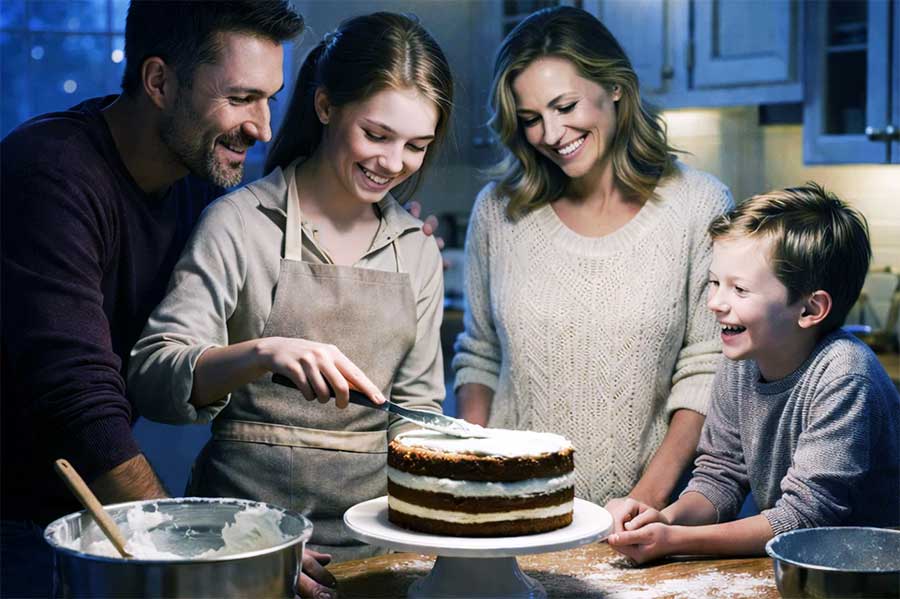
A family baking night is a regular evening ideally monthly, where the whole family bakes something together. It builds skills, creates memories, and gives everyone something to look forward to. Here's how to start the tradition, what to bake, and how to make it work for every age group in the house.
Some of the best family traditions start small. A Friday evening with nowhere to be. A recipe someone wanted to try. Flour on the worksurface, music in the background, and the kind of unstructured time together that's surprisingly hard to find in a busy week.
That's how family baking night starts for most people, not as a grand plan, but as a single good evening that everyone wants to repeat.
The trick is turning that one good evening into a habit. Something the family expects, looks forward to, and protects in the calendar the same way you'd protect a weekend trip or a birthday dinner. Because the magic of family baking night isn't any single bake. It's the accumulation. Month after month, your children's skills grow. The recipes get more ambitious. The mess gets more controlled (mostly). And years from now, when your kids are making croissants in their own kitchens, they'll trace it back to those evenings.
"The best family baking nights are the ones where nobody's trying to be perfect. Just flour, laughter, and something delicious at the end." — Paula, CrumbleCrate Founder
Step 1: Pick Your Night and Protect It
The single most important thing is consistency. A family baking night that happens "whenever we get around to it" will happen twice and then fade. One that happens on the first Saturday of every month becomes a tradition.
Choose an evening that works for the whole household. Weekends are usually easiest, Friday or Saturday evenings give you time without the pressure of school the next morning. Put it in the family calendar. Treat it like an appointment.
If monthly feels like too much at first, start with every six weeks. The key is regularity, not frequency. Once it's a habit, you'll find the family starts asking for it.
Step 2: Choose Recipes That Give Everyone a Job
The best family baking night recipes aren't necessarily the fanciest, they're the ones with enough steps and components that everyone can contribute something meaningful.
What makes a good family baking night recipe:
- Multiple distinct tasks (measuring, mixing, rolling, shaping, decorating)
- Some tasks suitable for younger children, some for older
- A visible transformation (dough rising, chocolate melting, cookies spreading)
- Something delicious enough that everyone wants to eat the result
- Achievable in 1–2 hours including baking time
Starter recipes (months 1–3):
- Homemade pizza: everyone makes their own with personal toppings
- Decorated cupcakes: bake together, then set up a frosting and topping station
- Chocolate chip cookies: simple enough for all ages, endlessly satisfying
- Banana bread: a crowd-pleaser with toddler-friendly tasks (mashing, stirring)
Building skills (months 4–6):
- Cinnamon rolls: introduces yeasted dough and proofing
- Fruit crumble or pie: pastry-making and filling
- Scones with clotted cream and jam, teaches creaming and folding
- Homemade pasta: rolling, cutting, shaping (a brilliant group activity)
More ambitious (months 7+):
- Layered celebration cake: multiple components, team coordination
- Éclairs or profiteroles: introduces choux pastry
- Rough puff pastry sausage rolls or turnovers
- Tempered chocolate truffles and dipped fruit
Step 3: Prep Before the Night
The difference between a chaotic family baking session and an enjoyable one almost always comes down to preparation.
Before baking night:
- Choose your recipe and read it through once yourself
- Check you have all ingredients (shop the day before, not the day of)
- Pre-measure ingredients for younger children: set them in small bowls, labelled if needed
- Clear the worksurface and set out all the equipment you'll need
- Charge your phone or tablet if you're following a video tutorial
- Put on an apron and have one ready for each child
The goal of prep is that when the family gathers, everything is ready to go. No hunting for measuring spoons, no realising you're out of eggs. Just open, bake, enjoy.
Step 4: Assign Roles (Without Making It Feel Like a Chore)
Every family member should have a meaningful role — but the roles should match their ability. If a five-year-old is asked to do something too difficult, they'll get frustrated. If a twelve-year-old is only allowed to sprinkle toppings, they'll get bored.
| Age | Good Roles |
|---|---|
| 2–4 | Pouring pre-measured ingredients, stirring, pressing cookie cutters, sprinkling toppings |
| 5–7 | Measuring with cups and spoons, cracking eggs, whisking, rolling dough, spreading |
| 8–12 | Following recipe steps, using a mixer, melting chocolate, timing, troubleshooting |
| 13+ | Leading a section, teaching younger siblings, handling advanced techniques |
| Adults | Oven work, hot liquids, knife work (until children are ready), overall guidance |
The most successful family baking nights feel collaborative, not instructional. You're baking together, not running a class.
Step 5: Make It Feel Special
Small touches turn a baking evening into an event:
- Play music. A family baking playlist makes the kitchen feel different from an ordinary weeknight.
- Eat the results together. Don't pack away immediately — sit down, have a cup of tea (or hot chocolate for the kids), and enjoy what you made. This is the reward.
- Take a photo. One photo of the finished bake each month. By the end of the year, you'll have a beautiful visual record of what you've made together.
- Let the kids name their creations. It sounds small, but giving a cake a silly name makes children feel ownership and pride.
- Rotate who chooses the recipe. Give each family member a turn to pick what you bake next month. Kids love having this power.
Step 6: Build Skills Month by Month
The real power of a monthly baking night is progression. You're not just making one-off treats — you're building a family skill set that grows more capable over time.
Month 1 might be cookies. Month 3, you're making scones with homemade pastry. By month 6, the family is tackling cinnamon rolls and yeasted dough. By month 12, you're making something you never imagined you could.
12 Months of Family Baking Night Ideas
| Month | Project | Key Skill Introduced |
|---|---|---|
| 1 | Chocolate chip cookies | Creaming butter, basic mixing |
| 2 | Homemade pizza dough | Working with yeast |
| 3 | Banana muffins | Portioning, oven awareness |
| 4 | Scones with jam and cream | Cutting in butter, shaping |
| 5 | Cinnamon rolls | Proofing yeasted dough |
| 6 | Fruit crumble | Pastry-making, filling |
| 7 | Decorated cupcakes | Piping and decorating |
| 8 | Homemade pasta | Rolling, cutting, shaping |
| 9 | Shortcrust pastry tart | Blind baking, custard |
| 10 | Chocolate truffles | Melting and tempering |
| 11 | Bread rolls | Kneading, shaping, scoring |
| 12 | Celebration cake | Multi-component project |
Frequently Asked Questions
How do I start a family baking night?
Pick one evening per month that works for the whole family, choose a recipe everyone can contribute to, prep your ingredients in advance, and keep the atmosphere relaxed. Start with something forgiving like cookies or pizza dough, and build up to more ambitious projects as the family gets into the rhythm.
What should we bake on family baking night?
Choose recipes with multiple steps so everyone has a job. Good options include pizza (everyone makes their own), cupcakes with a frosting station, cinnamon rolls, homemade bread, fruit pies, or biscuit decorating. Match the recipe to your youngest baker's ability and give older children more complex tasks within the same project.
How do I keep baking fun for different ages at the same time?
Give each child a role that matches their age. Toddlers pour and stir. Young children measure and crack eggs. Older children follow more complex steps. Teens can lead sections independently. The secret is choosing recipes with enough distinct tasks that everyone stays engaged without competing for the same job.
Does CrumbleCrate work for family baking nights?
Yes — CrumbleCrate is one of the easiest ways to run a family baking night because each kit arrives with pre-measured ingredients, a professional tool, and step-by-step video tutorials. You don't need to plan, shop, or figure out which recipe to choose. Just open the box and bake together. Rated 4.9/5 by 10,847 bakers.
How often should we do family baking night?
Monthly works best for most families. It's frequent enough to build skills and anticipation, but not so often that it becomes a chore. Pick the same weekend each month — first Saturday, last Friday, whatever works — so it becomes a reliable part of your family rhythm.
The Bottom Line
Family baking night doesn't need to be complicated. Pick a night, pick a recipe, prep ahead, and let everyone have a job. The first one might be messy. The second will be smoother. By the fifth or sixth, it'll be something your family genuinely looks forward to — and your children will be noticeably better bakers than when you started.
The best traditions are the ones that start with a single decision to try.
Want to skip the planning and get straight to baking together? CrumbleCrate's monthly kits arrive with everything your family needs pre-measured ingredients, a professional tool you keep, and step-by-step video tutorials. One box, one evening, one new skill every month. It's family baking night in a box.

Paula
Crumble Crate is the culmination of years of experimenting with cooking and baking in my home kitchen. Since I was a small child, I found a simple pleasure in creating fresh delicious treats and sharing them with my family and friends. As life became more complicated, the basic task of baking in my kitchen became an even more critical and comforting sanctuary.I want to share this joy of baking with you so that you too can experience the bliss you feel when you create and share fresh baked goodies with your loved ones. My goal is for us to explore baking together and take the stress out of the process so that you can decompress and learn to find refuge in your kitchen. I can’t wait to begin this baking journey with each of you!


