

Baking Soda vs. Baking Powder: What They Do, When to Use Them, and How to Swap
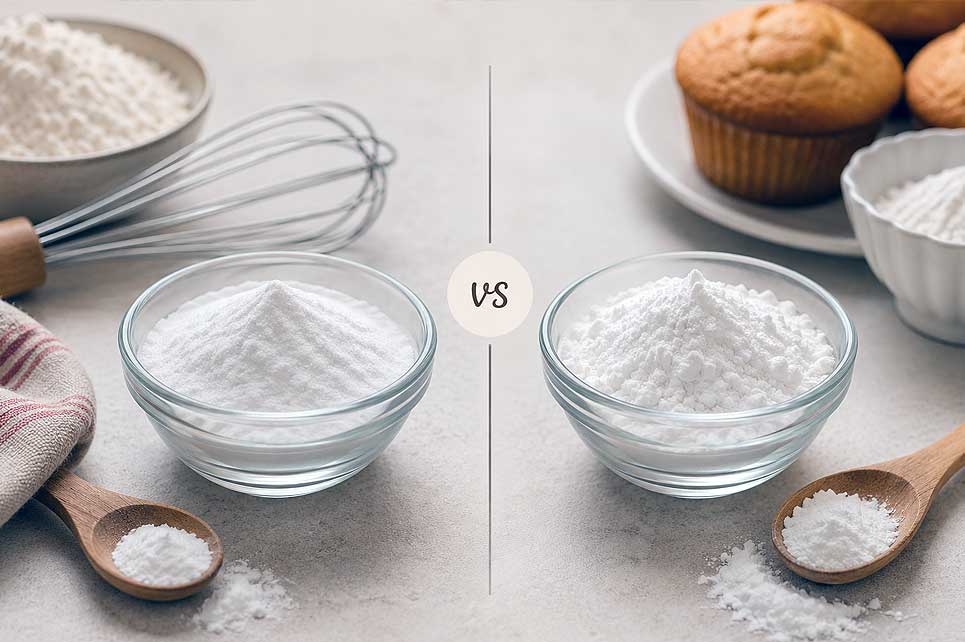
If you've ever stood in your kitchen wondering whether a recipe needs baking soda or baking powder, you're not alone. It's one of the most common questions home bakers ask—and one of the easiest mistakes to make.
While both ingredients help baked goods rise, they work in different ways and aren't always interchangeable. Understanding the difference can help you create lighter cakes, fluffier muffins, perfectly chewy cookies, and bakery-worthy desserts every time.
In this guide, we'll explain exactly what baking soda and baking powder do, when to use them, how they affect your baked goods, and what to do if you're missing one of them. :contentReference[oaicite:0]{index=0}
The Quick Answer
Both baking soda and baking powder are chemical leavening agents. Their job is to create carbon dioxide gas bubbles that help batters and doughs rise during baking.
- Baking Soda requires an acidic ingredient to activate.
- Baking Powder contains its own acid and can work on its own.
Although they may look similar, they behave very differently in recipes. :contentReference[oaicite:1]{index=1}
What Is Baking Soda?
Baking soda is pure sodium bicarbonate. It's a base that reacts when combined with moisture and an acid.
Common acidic ingredients that activate baking soda include:
- Buttermilk
- Yogurt
- Sour cream
- Lemon juice
- Vinegar
- Brown sugar
- Molasses
- Honey
- Natural cocoa powder
When baking soda reacts with these ingredients, it produces carbon dioxide gas that creates lift and structure in baked goods. :contentReference[oaicite:2]{index=2}
What Is Baking Powder?
Baking powder contains baking soda, powdered acids, and a stabilizing starch. Because the acid is already included, baking powder doesn't rely on acidic ingredients in your recipe to work.
Most baking powders sold today are double-acting, meaning they react twice:
- When mixed with liquid.
- Again when heated in the oven.
This double reaction provides a more reliable rise and makes baking powder especially useful in cakes, muffins, biscuits, and quick breads. :contentReference[oaicite:3]{index=3}
Why Some Recipes Use Both
Many professional baking recipes use both baking soda and baking powder.
Here's why:
- Baking soda balances acidity and improves browning.
- Baking powder provides additional lift and structure.
Think of baking soda as a flavor and color enhancer, while baking powder acts as the primary source of rise. :contentReference[oaicite:4]{index=4}
How They Affect Your Baked Goods
Baking Soda
- Creates more browning
- Encourages cookie spread
- Produces chewy textures
- Can leave a bitter taste if overused
Baking Powder
- Creates a lighter crumb
- Produces taller baked goods
- Helps cakes and muffins rise evenly
- Results in softer textures
Using too much of either ingredient can negatively impact flavor, texture, and appearance. :contentReference[oaicite:5]{index=5}
Baking Soda vs. Baking Powder in Cookies
Cookies are one of the easiest places to see the difference between the two leaveners.
Cookies made primarily with baking soda tend to:
- Spread more
- Brown faster
- Develop crisp edges
- Remain chewy in the center
Cookies made with only baking powder often:
- Stay thicker
- Remain lighter in color
- Have a softer, cake-like texture
This is why many chocolate chip cookie recipes use a combination of both ingredients. :contentReference[oaicite:6]{index=6}
Common Baking Ratios
While every recipe is different, these general guidelines can help:
- Baking Powder: 1 to 1¼ teaspoons per cup of flour
- Baking Soda: Approximately ¼ teaspoon per cup of flour when sufficient acid is present
These ratios provide a useful starting point when developing or adjusting recipes. :contentReference[oaicite:7]{index=7}
Can You Substitute One for the Other?
Sometimes—but not directly.
If You Need Baking Powder
For every 1 teaspoon of baking powder, combine:
- ¼ teaspoon baking soda
- ½ teaspoon cream of tartar
If You Need Baking Soda
For every ¼ teaspoon baking soda, use approximately:
- 1 teaspoon baking powder
Keep in mind that substitutions may slightly alter flavor, texture, and browning. :contentReference[oaicite:8]{index=8}
How to Test for Freshness
Testing Baking Soda
Add ¼ teaspoon baking soda to 1 tablespoon vinegar. If it fizzes vigorously, it's still active.
Testing Baking Powder
Mix ½ teaspoon baking powder into ¼ cup hot water. Strong bubbling means it's fresh and ready to use. :contentReference[oaicite:9]{index=9}
Common Baking Mistakes to Avoid
- Using too much leavening agent
- Using expired baking powder or baking soda
- Skipping the step of whisking dry ingredients together
- Letting batter sit too long before baking
- Using Dutch-process cocoa when a recipe calls for natural cocoa
Small measuring mistakes can have a surprisingly large impact on the final result. :contentReference[oaicite:10]{index=10}
Final Thoughts
Understanding the difference between baking soda and baking powder is one of the simplest ways to improve your baking results.
Baking soda requires acid to activate and helps create browning and chewy textures. Baking powder contains its own acid and delivers reliable lift for cakes, muffins, biscuits, and quick breads.
When used correctly, these two pantry staples can transform ordinary recipes into bakery-quality creations.
Ready to Put Your Baking Skills to Work?
At CrumbleCrate, every baking kit includes premium ingredients, specialty tools, step-by-step recipe cards, and video tutorials designed to help you bake with confidence.

Paula
Crumble Crate is the culmination of years of experimenting with cooking and baking in my home kitchen. Since I was a small child, I found a simple pleasure in creating fresh delicious treats and sharing them with my family and friends. As life became more complicated, the basic task of baking in my kitchen became an even more critical and comforting sanctuary.I want to share this joy of baking with you so that you too can experience the bliss you feel when you create and share fresh baked goodies with your loved ones. My goal is for us to explore baking together and take the stress out of the process so that you can decompress and learn to find refuge in your kitchen. I can’t wait to begin this baking journey with each of you!


